

As the UAE continues to strengthen its global business presence, the country is set to implement significant changes to its tax laws, effective from January 1, 2026. These reforms are part of the UAE’s ongoing efforts to modernize its tax framework, improve transparency, and streamline compliance for businesses across the nation.
At Al Tawakkal, we are committed to helping businesses understand and adapt to these changes, ensuring that they remain compliant and can seize the opportunities presented by the updated UAE Corporate tax regulations. In this blog, we’ll outline the key updates to the UAE’s tax rules and explain what they mean for businesses moving forward.
Major Updates Under the UAE Tax Rule Changes 2026
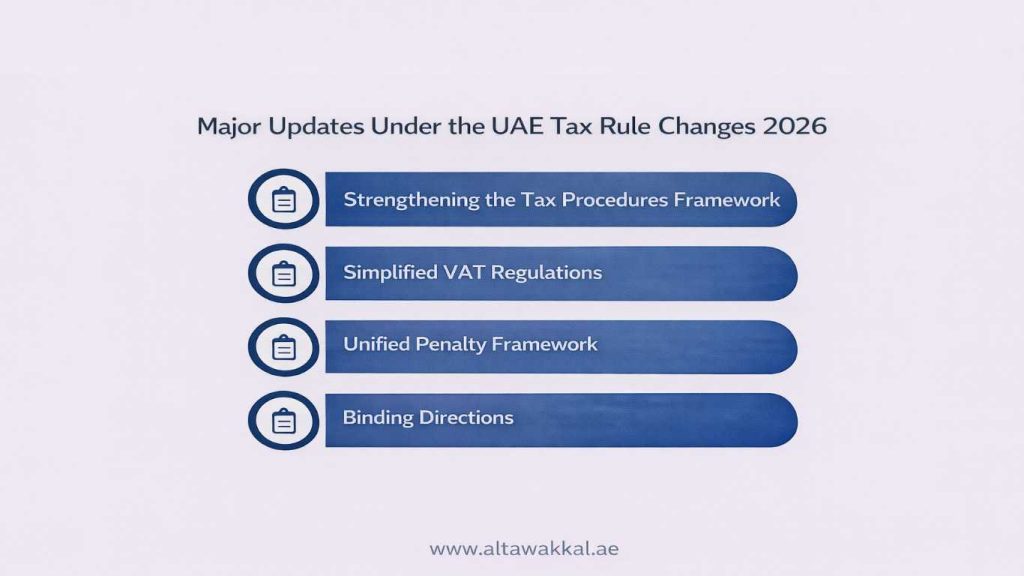
1. Strengthening the Tax Procedures Framework
The UAE’s new tax rule changes, implemented under Federal Decree-Law No. 17 of 2025, aim to simplify and modernize the tax procedures, making compliance more predictable and manageable for businesses. Here’s a breakdown of the key changes:
- 5-Year Window for Refunds and Credits: From 2026, businesses will have a 5-year period to request refunds or apply for credits on any overpaid taxes. This provides additional time for businesses to manage their tax obligations efficiently.
- Extended Audit Periods: The amendment introduces a standard 5-year limitation for tax audits and assessments, with the possibility of extending this period to 15 years in cases involving fraud or tax evasion. This is a major shift, encouraging businesses to keep their records accurate and well-organized.
- Unified Tax Code for All Taxes: A common tax code will be introduced for all federal taxes, ensuring consistency in how taxes are reported and audits are conducted. This simplification will help businesses adhere to tax requirements more easily.
At Al Tawakkal, we can help you navigate these changes by providing expert advice on corporate tax procedures and assisting with accurate record-keeping and timely filing.
2. Simplified VAT Regulations
In line with the UAE’s commitment to improving its VAT framework, Federal Decree-Law No. 16 of 2025 introduces several key changes, which will be effective from January 2026:
- Self-Invoicing Requirement Eliminated for Reverse Charge Mechanism (RCM): Under the previous VAT rules, businesses had to issue self-invoices when importing goods or services under the reverse charge mechanism. The new reforms eliminate this requirement, streamlining the process and reducing administrative burdens for businesses.
- New Limits for VAT Credit Recovery: VAT credits can now be carried forward for only 5 years. After this period, businesses will lose the right to recover VAT credits if they are not used or refunded. This is a critical change that businesses need to be mindful of to avoid losing out on tax recovery.
- Tighter VAT Compliance: The Federal Tax Authority (FTA) will be able to deny VAT claims if a transaction is linked to tax evasion. Businesses will need to verify their suppliers and ensure all transactions are legitimate to avoid costly penalties.
Al Tawakkal is here to ensure that your business is compliant with the updated VAT laws. Our team can guide you through the changes, help you review your VAT credits, and ensure you meet all the new requirements.
3. Unified Penalty Framework: A New Approach to Non-Compliance
Starting on April 14, 2026, the UAE will implement a new, unified penalty framework through Cabinet Decision No. 129 of 2025. Here are the most important updates:
- Reduced Penalties for Administrative Errors: Penalties for common administrative mistakes, like not maintaining records in Arabic, have been significantly reduced—from AED 20,000 to AED 5,000. This will offer businesses some relief, but it is important to ensure compliance with all documentation requirements.
- Tax Filing Penalties: The penalty for submitting incorrect tax returns has been standardized. The fine will now be AED 500 for the first violation and AED 2,000 for subsequent violations. However, businesses can avoid these penalties by submitting corrected returns or valid voluntary disclosures in a timely manner.
- Late Payment Penalties Overhauled: The penalty for late payments will change to a yearly rate of 14%, applied monthly on outstanding balances. This aligns with global best practices and underscores the importance of timely tax payments.
As Al Tawakkal continues to provide tax compliance support, it is critical for businesses to stay on top of these new penalty regulations to avoid costly mistakes.
4. Binding Tax Directions: Clarity and Consistency in Tax Disputes
One of the key updates is the introduction of binding directions issued by the Federal Tax Authority (FTA). These official instructions will dictate how specific tax provisions should be applied:
- Less Flexibility for Businesses: Once the FTA issues a binding direction, businesses must follow it. This reduces the flexibility companies had in interpreting tax rules. If a business’s interpretation conflicts with the FTA’s direction, it must adhere to the FTA’s stance.
- Regular Monitoring is Essential: As these binding directions will directly impact tax practices, businesses need to stay up to date with any new instructions issued by the FTA to ensure ongoing compliance.
At Al Tawakkal, we help businesses stay informed of these updates and adjust their tax strategies accordingly.
Also Read: Corporate Tax in UAE: Deadline Alert for Businesses
What Do These Changes Mean for Your Business?
The 2026 tax rule changes will require businesses to be more diligent in their tax management. Here’s what businesses need to focus on:
- Enhanced Compliance Practices: Companies will need to adopt more robust systems for managing tax documentation, VAT claims, and supplier verification. Al Tawakkal can help set up compliance frameworks that align with the new rules.
- Upgraded Record-Keeping Systems: With tighter regulations and audit processes, businesses should upgrade their record-keeping systems to ensure they can meet the enhanced reporting requirements.
- Proactive Tax Planning: With penalties becoming more stringent and the window for claiming VAT credits shortened, businesses must engage in proactive tax planning. Our expert tax consultants at Al Tawakkal can guide you through this process, helping you avoid errors and capitalize on opportunities.
- Internal Training and Awareness: The new rules require businesses to increase internal training and ensure that all finance and compliance teams understand the updated regulations. Al Tawakkal offers tailored training sessions to equip your team with the knowledge they need to stay ahead.
Why Partner with Al Tawakkal?
The UAE’s tax rule changes bring both challenges and opportunities. To thrive in this evolving environment, businesses must stay on top of these updates and align their tax strategies accordingly. At Al Tawakkal, our team of experts is committed to providing businesses with the support they need to navigate these changes successfully. Whether it’s ensuring compliance with VAT regulations, preparing for corporate tax audits, or managing penalties, we are here to help your business stay compliant and competitive.
Contact Al Tawakkal Today to learn how our services can help your business adapt to the 2026 tax reforms with ease. Let us guide you through the complexities of the new tax landscape and ensure your continued success in the UAE market.

Muhammed Ajmal Mayyeri is a seasoned professional with over 8 years of experience in accounting, auditing, and taxation. His extensive career spans both India and the UAE, where he has honed his skills in financial analysis, tax compliance, and auditing. With a deep understanding of both direct and indirect taxes, Muhammed brings invaluable expertise to every project he undertakes, ensuring thorough financial insights and compliance.